
TPO vs EPDM: Which Flat Roof Fits Your Building?
How the two most common single-ply roofs compare on seams, summer heat, lifespan and repairs, and which one suits office and commercial buildings in Ontario.
Call 1-833-775-7663 Oakville head office · Flat roofs for commercial, industrial and institutional buildings across Ontario
Karol Rajkowski
Vice President, OYH Roofing
Published October 2, 2026 · 7 min read
Short answer
TPO vs EPDM comes down to heat and movement. TPO is a white, heat-welded thermoplastic that keeps buildings cooler in summer and can qualify for Toronto's cool roof grant. EPDM is a black synthetic rubber that stretches with the building and has the longer track record. Both are single-ply flat roofs.
What is the difference between TPO and EPDM?
The main difference in TPO vs EPDM is the material. TPO is a thermoplastic polyolefin sheet, usually white, whose seams are welded with hot air into one piece. EPDM is a synthetic rubber sheet, usually black, whose seams are joined with adhesive tape. That one difference drives most of the others.
| Difference | TPO | EPDM |
|---|---|---|
| Material | Thermoplastic polyolefin with a polyester or glass reinforcement | Synthetic rubber (ethylene propylene diene monomer) |
| Seams | Heat-welded with hot air, no open flame | Joined with self-adhesive seam tape |
| Colour and summer heat | White and reflective; keeps the roof cooler | Usually black; absorbs more summer heat |
| Movement | Stiffer sheet | Stretches up to 300 per cent and recovers |
| Service life (maker's estimate) | 20 to 30 years | Can exceed 50 years |
| Repairs | Patches are welded on; old TPO needs careful cleaning before it will weld | Patches are taped or glued on |
| Grease and oils | Limited effect from grease in Tremco's chart | Oils and grease make it swell |
Product quality varies inside each type. Holcim Elevate advises checking a TPO's heat and UV ageing test results, and both membranes come in different thicknesses. Compare the exact products, not just the letters. For most owners, the TPO vs EPDM choice comes down to summer heat, roof shape and how long they plan to own the building.

When is TPO the better choice?
TPO is usually the better choice in the TPO vs EPDM decision when summer heat matters. A white TPO roof reflects sunlight, so air-conditioned buildings with large roofs, such as single-storey offices, stores and plazas, carry less heat into the space below.
- Cool roof grants. Toronto's Eco-Roof Incentive Program pays $5 per square metre for a new cool roof membrane with an SRI of 78 or more. Many white TPO products are rated that high, so check the product sheet; standard black EPDM is not.
- Welded seams. Hot-air welds join the sheets into one piece with no open flame, which suits occupied buildings.
- Kitchen exhaust nearby. In Tremco's chart, TPO shows only a limited effect from grease, while oils and grease make EPDM swell.
Our cool roof guide explains the Toronto grant, and the restaurant roofing guide covers roofs that see kitchen grease. If you are also weighing PVC, our PVC vs TPO guide compares the two white, heat-welded membranes. For an asphalt-based option, our modified bitumen vs TPO guide compares a 2-ply system with TPO.
When is EPDM the better choice?
In the TPO vs EPDM decision, EPDM is usually the better choice when the roof moves a lot or has an awkward shape. The rubber stretches and recovers, so it handles curved details, many penetrations and buildings that shift with the seasons, and it has a long track record.
- Long service life. Holcim Elevate puts EPDM's service life at more than 50 years in some cases, against 20 to 30 years for TPO.
- Simple repairs. Patches are taped or glued on, without welding equipment.
- Heated buildings. Where most energy goes to heating rather than cooling, a black roof costs less in summer heat than it would on an air-conditioned building.
EPDM's weak points are its taped seams, which need careful installation, its black surface in summer, and its reaction to oils and grease.
Still weighing TPO vs EPDM?
Tell us about the building and we will set up a free roof assessment and a written quote.
Call 1-833-775-7663Request an assessmentWhat does each roof need to last in Ontario?
Whichever side of TPO vs EPDM you choose, the roof lasts longest with inspections in spring and fall, clear drains and as little foot traffic as possible. The checks differ mainly at the seams: welds on TPO, tape on EPDM. For the fall round, see how to prepare a flat roof for winter. Our guide to commercial flat roof lifespan covers what else shortens or extends a roof's life in Ontario.
| Check | TPO | EPDM |
|---|---|---|
| Seams | Probe the welds for gaps | Look for lifting or loose seam tape |
| Surface | Cracks, punctures, worn spots near units | Punctures, shrinkage at the edges, swelling from oils |
| Flashings | Corners, curbs and walls | Corners, curbs and walls |
| Drains and ponding | Clear drains; note water that stays for two days | Clear drains; note water that stays for two days |
| After storms | Wind and debris damage | Wind and debris damage |
Can you switch from EPDM to TPO?
Yes. Owners often switch from EPDM to TPO when the old roof is due, either by tearing it off or, in some cases, by laying the new roof over it. A recover only works when the old roof is dry and the TPO maker approves the build-up, usually with a cover board between the two.
If a moisture survey finds wet insulation under the EPDM, the old roof has to come off. Our warehouse roof replacement guide explains how to choose between a recover and a tear-off, and how the work runs while the building stays open.
Which systems does OYH Roofing install?
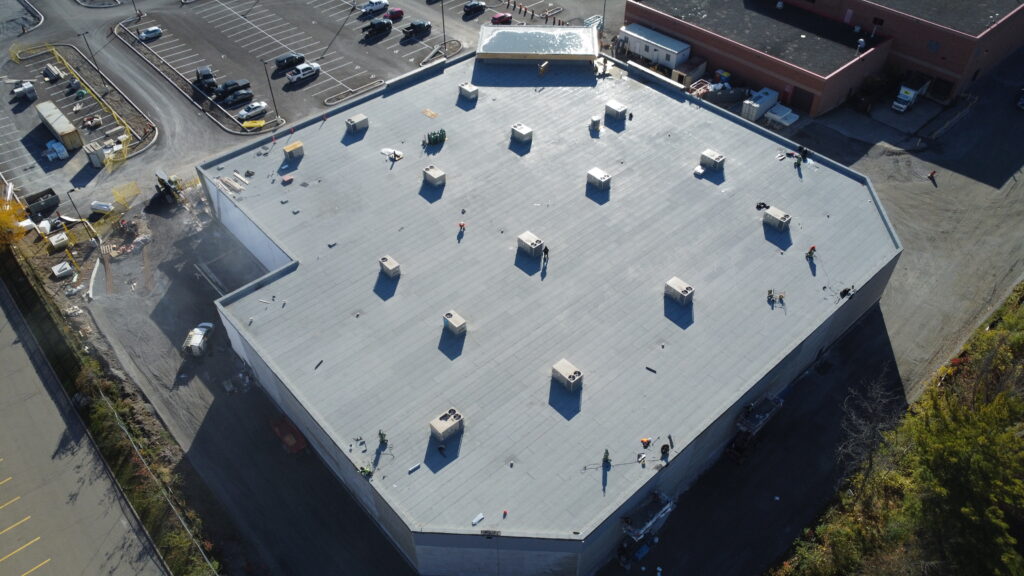
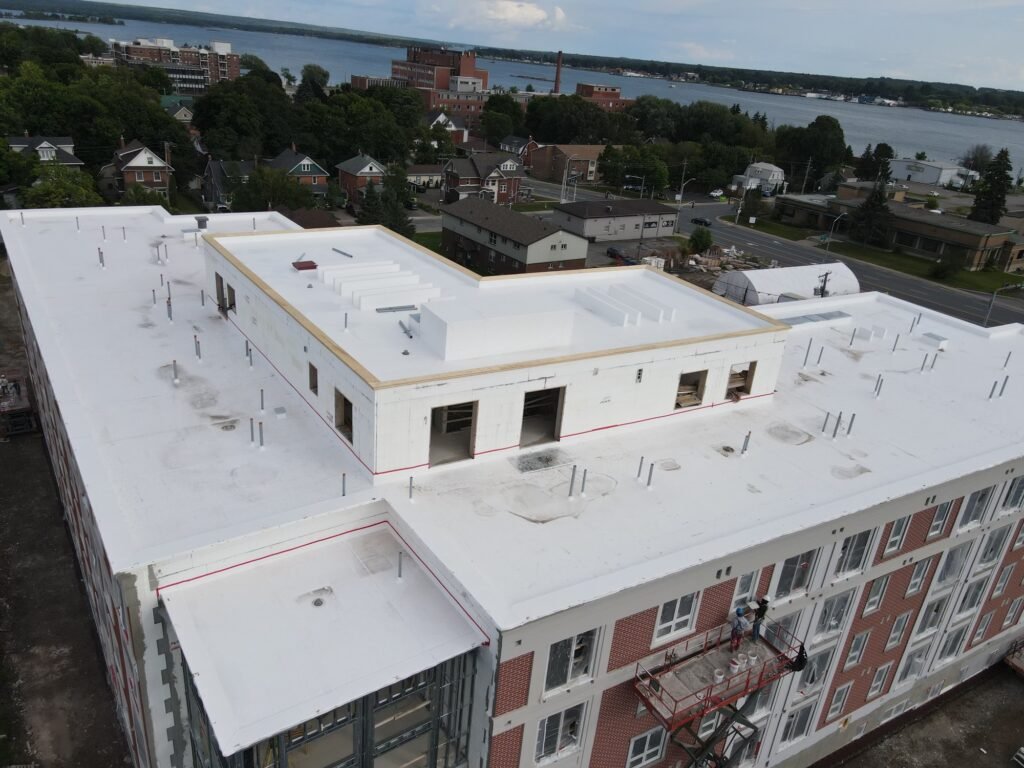
OYH Roofing installs TPO, EPDM, PVC, modified bitumen and built-up roofing on commercial, industrial and institutional buildings across Ontario. Our published TPO projects include these two:
| Project | System | Size | Warranty |
|---|---|---|---|
| Millomat Stampings, Mississauga | 60 mil TPO; new addition plus re-roof | 50,000 sq ft | 20 years on labour and materials |
| Devi Mandir, Pickering | 60 mil TPO; two old layers and a coating removed | 6,500 sq ft | 20 years on labour and materials |


See the rest on the completed projects page, or read about our roofing services.
Frequently asked questions
What are the disadvantages of a TPO roof?
TPO depends on good welds made on site, so the installer's skill matters. Quality varies between brands, old TPO can be harder to weld during repairs, and one manufacturer that makes both membranes estimates a 20 to 30 year service life for TPO, shorter than its estimate for EPDM.
Is TPO considered a rubber roof?
No. TPO is a thermoplastic, not rubber, although people often call any single-ply flat roof a rubber roof. EPDM is the true rubber roof, made from synthetic rubber. The difference shows at the seams: TPO seams are welded with hot air, while EPDM seams are joined with adhesive tape.
Can TPO be installed over EPDM?
Sometimes. A TPO recover over EPDM only works when the old roof is dry and sound and the TPO manufacturer approves the build-up, usually with a cover board in between. If a moisture survey finds wet insulation, the EPDM and the wet boards have to come off first.
What are the disadvantages of an EPDM roof?
EPDM seams are taped rather than welded, so they need careful installation and checking. Standard black EPDM absorbs summer heat and does not meet the reflectance Toronto's cool roof grant requires. Oils and grease make it swell, and heavy foot traffic or dropped tools can puncture it.
Which lasts longer, TPO or EPDM?
In TPO vs EPDM, EPDM usually has the longer service life. Holcim Elevate, which makes both, says EPDM can exceed 50 years and puts TPO at 20 to 30 years. On a real roof, the installation, the thickness and the maintenance matter as much as the membrane.
Which is better for an office building in Ontario?
In the TPO vs EPDM choice for a single-storey or low-rise office with air conditioning, white TPO usually wins, because it reflects summer heat and can qualify for Toronto's cool roof grant. For a roof with many penetrations, awkward shapes or a lot of movement, EPDM can be the better fit. An inspection settles it.
Karol Rajkowski
Vice President · OYH Roofing
Karol Rajkowski is Vice President of OYH Roofing, an Oakville-based ICI flat-roofing contractor whose projects include the City of Mississauga building at 3185 Mavis Rd and the Marriott Hotel in Vaughan. Learn more about the OYH team.
Sources
- The EPDM vs. TPO debate, Holcim Elevate.
- Chemical Resistance of Thermoplastic Membranes, Tremco Roofing technical bulletin, Rev. 03/04/26.
- Eco-Roof Incentive Program, City of Toronto.
- OYH Roofing project records: Millomat Stampings, Mississauga; Devi Mandir, Pickering; 777 Niagara St, Welland (October 2026).
OYH Roofing, 2120 Speers Rd, Oakville, ON L6L 2X8 · 1-833-775-7663 · info@oyhroofing.ca