
Prepare a Flat Roof for Winter: A Fall Checklist for Ontario Buildings
What to check in October, who should do it, and why repairs slow down once GTA temperatures drop toward 4°C in November.
Call 1-833-775-7663 Oakville head office · Inspections and repairs for commercial, industrial and institutional flat roofs across Ontario
Karol Rajkowski
Vice President, OYH Roofing
Published October 5, 2026 · 8 min read
Short answer
To prepare a flat roof for winter in Ontario, book a roof inspection in October, have the crew clear every drain and scupper, seal open seams and flashings, and repair soft, wet areas before November. Toronto's average daily temperature falls to 4.1°C in November, right at the 4°C line below which roofing manufacturers apply cold-weather rules.
How do you prepare a flat roof for winter?
You prepare a flat roof for winter by getting water off the roof and keeping it out of the roof. That means clear drains, sealed seams and flashings, no wet insulation and a plan for snow. A roofing crew checks the roof surface; building staff check from the ground and from inside.
| Check | What goes wrong in winter if it is missed | Who checks it |
|---|---|---|
| Roof drains, scuppers and gutters | Leaves block them; meltwater backs up and refreezes under flashings. | Roofing crew; staff watch downspouts in rain |
| Ponding areas | Water left 48 hours after rain freezes and adds weight. | Roofing crew |
| Seams and laps | Freeze-thaw cycles work small gaps wider. | Roofing crew |
| Flashings at walls, curbs and units | Cracked sealant lets water in at the edges. | Roofing crew |
| Membrane surface | Blisters, punctures and soft, wet spots spread when water freezes. | Roofing crew |
| Rooftop equipment | Open panels and dripping condensate lines turn into ice and leaks. | Roofing crew and HVAC contractor |
| Debris and branches | Branches break under ice and land on the roof. | Staff from the ground; crew on the roof |
| Top-floor ceilings | Stains show leaks before snow hides the roof. | Building staff, inside |
| Access and snow plan | A rushed snow job can overload or cut the roof. | Owner or property manager |
Many online checklists tell owners to climb up and test the drains with a bucket of water. On a commercial building, leave that to a crew equipped to work at heights. Ontario requires fall-arrest or travel-restraint equipment for workers on a roof, and a wet, leaf-covered membrane is slippery. If water still sits in the same spots 48 hours after rain, our guide to ponding water on a flat roof explains the causes and fixes.
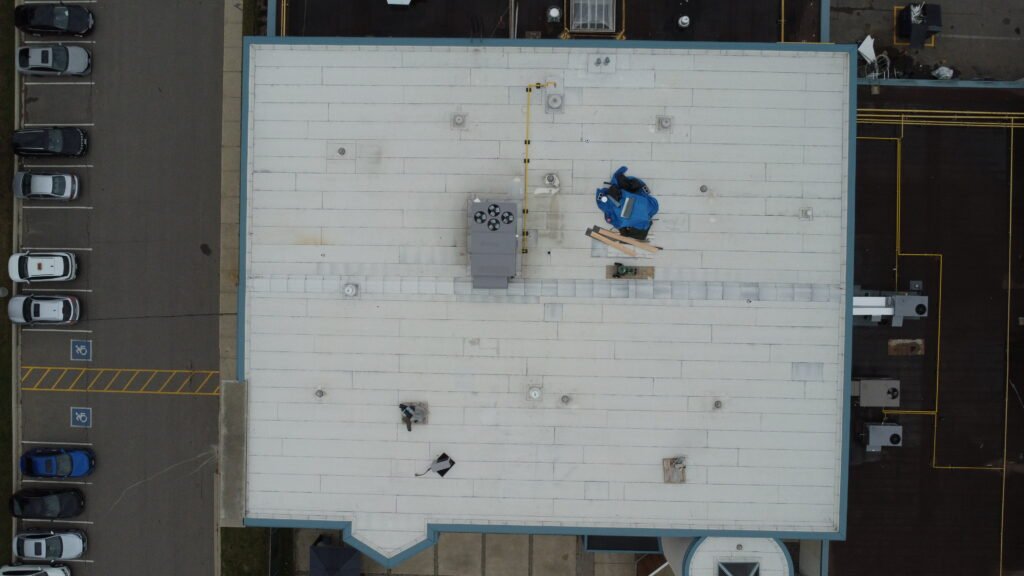
What can building staff check without going on the roof?
Building staff can do part of the work from the ground and from inside. These checks help you prepare a flat roof for winter without anyone climbing up, and they tell the roofer where to look first during the pre-winter roof inspection:
- Downspouts during rain. A dry downspout in a downpour, or water spilling over the roof edge, points to a blocked drain.
- Top-floor ceilings. New stains or damp tiles near walls, skylights and rooftop units.
- Exterior walls. Streaks or peeling paint below the roof edge can mean water behind the flashing.
- Records. The roof warranty and the last inspection report. Most warranties require the roof to be properly maintained.
Keep a dated log with photos. If a leak appears in January, your insurer and your roofer will ask what was there in October.
When should you book a pre-winter roof inspection?
Book it for early to mid October, the last comfortable window to prepare a flat roof for winter in the GTA. Environment and Climate Change Canada's 1991 to 2020 normals for Toronto Pearson show an average daily temperature of 10.0°C in October and 4.1°C in November, when nights average 0.2°C. Below 4°C, manufacturers apply cold-weather rules that slow repairs down.
| Month | Average daily temperature | Average daily low | Average snowfall | What it means for roof work |
|---|---|---|---|---|
| September | 16.9°C | 11.6°C | 0 cm | Book the pre-winter roof inspection |
| October | 10.0°C | 5.3°C | 0.2 cm | Best window for repairs; below 10°C, ARMA advises heated storage for modified bitumen materials |
| November | 4.1°C | 0.2°C | 9.3 cm | Cold-weather rules begin below 4°C (IKO); first snow |
| December | -1.6°C | -5.0°C | 24.1 cm | Repairs possible with cold-weather products, but slower |
| January | -5.0°C | -8.9°C | 31.5 cm | Emergency repairs and snow load watch |
Winter repairs are still possible, and our Toronto leak repair guide explains how crews handle them. But materials need heated storage, adhesives dry slower, daylight is short, and snow has to come off before anyone can see the problem. The easiest time to prepare a flat roof for winter is before the weather sets the schedule.
Need help to prepare a flat roof for winter?
Tell us about the building and we will set up a free roof assessment before the November cool-down.
Call 1-833-775-7663Request an assessmentWhich roof repairs should be done before winter?
When you prepare a flat roof for winter, fix anything that lets water into the roof: open seams, failed flashings, punctures, broken drain parts and wet insulation. Water that gets in during a late fall rain freezes, expands and spreads under the membrane, so a small October repair can become a bigger one by March.
| Repair | Why it should not wait | Cold-weather limit (example) |
|---|---|---|
| Seams and flashings resealed | Open laps let meltwater in all winter. | IKO TPO primer and sealant: -7°C minimum |
| Membrane patches glued down | Punctures under snow cannot be seen or reached. | IKO TPO membrane adhesive: 4°C; cold-weather version: -4°C |
| Modified bitumen repairs | Blisters and split laps let water into the plies. | Self-adhered sheets typically need 4 to 10°C (ARMA) |
| Drain bowls and strainers | A loose drain leaks straight into the building. | Possible in winter once the drain is found and cleared |
| Wet insulation replaced | Wet boards lose insulating value and freeze. | Each opened section must be closed the same day (ARMA) |
If the pre-winter roof inspection finds wet insulation across a large part of the roof, patching may not be the right answer. Our warehouse roof replacement guide explains how to choose between a recover and a tear-off, and a replacement can then be planned for the spring.
How do you plan for snow on a flat roof?
Part of the job when you prepare a flat roof for winter is deciding, before the first storm, who will judge the snow load and who will remove snow if it has to come off. Ontario's Ministry of Labour advises owners to have a professional engineer assess roofs carrying significant snow or showing signs of structural distress, such as twisting, bending or cracking.
- Know the weight. A cubic foot of snow weighs about 7 pounds when new and dry and up to 30 pounds when old and compacted. Rain on snow adds more. Our flat roof snow load guide lists the Building Code snow loads for 23 Ontario areas.
- Watch the drifts. Snow piles up against rooftop units, penthouses and walls between roof levels, where loads can become excessive.
- Hire the right crew. Workers on a roof need fall-arrest or travel-restraint equipment, and snow should come off evenly, without concentrated loads.
- Protect the membrane. Show the contractor where drains, seams and equipment are, and keep metal tools and ice picks off the surface.
- Secure the drop zone. Fence off the area where snow lands.
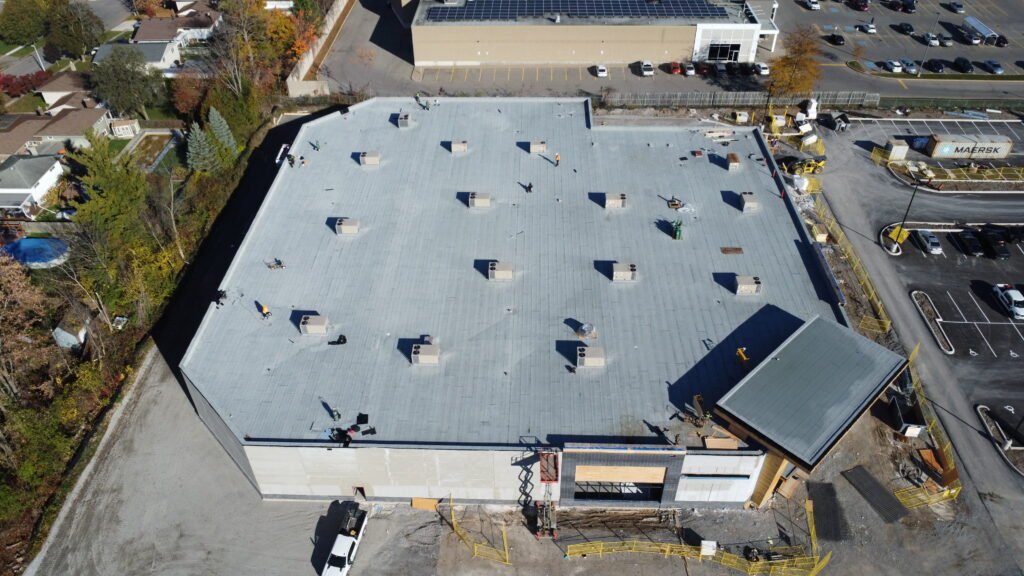
What are the warning signs of roof trouble in winter?
Even after you prepare a flat roof for winter, watch for new ceiling stains or drips, ice building up below the roof edge, water spilling over the edge, and any twisting, bending or cracking in the structure. Report them the same day and keep staff off the roof.
| Sign | What it can mean | What to do first |
|---|---|---|
| New stain or drip on a top-floor ceiling | A leak at a seam, flashing or penetration | Move equipment, contain the water, take photos, call a roofer |
| Ice building up below the roof edge or at downspouts | A blocked drain or scupper | Keep people clear of falling ice; call a roofer |
| Water spilling over the roof edge | Frozen or blocked drains, with water ponding behind them | Call a roofer; keep staff off the roof |
| Twisting, bending or cracking in beams or walls | Possible structural distress from snow load | Keep people out of the area; have a professional engineer assess the roof |
Emergency steps for building staff stop at what can be done safely from inside. Our Mississauga leak repair page explains what happens after the call.
Which flat roofs does OYH Roofing inspect and maintain?
OYH Roofing inspects, repairs and replaces flat roofs on commercial, industrial and institutional buildings across Ontario from its head office in Oakville, and helps owners prepare a flat roof for winter as part of that work. These are some of the roofs we have installed:
| Project | System | Size | Warranty |
|---|---|---|---|
| 777 Niagara St, Welland | IKO 2-ply modified bitumen | 52,300 sq ft | 20-year system warranty |
| City of Mississauga, 3185 Mavis Rd | IKO 2-ply modified bitumen | 8,500 sq ft | 20-year system warranty |
| Millomat Stampings, Mississauga | 60 mil TPO | 50,000 sq ft | 20 years on labour and materials |
| Residential building, Sault Ste. Marie | PVC | 17,500 sq ft | 30 years on labour and materials |
Manufacturer warranties set their own maintenance terms, which usually include regular inspections and records of rooftop work. Keep each inspection report with the warranty documents.
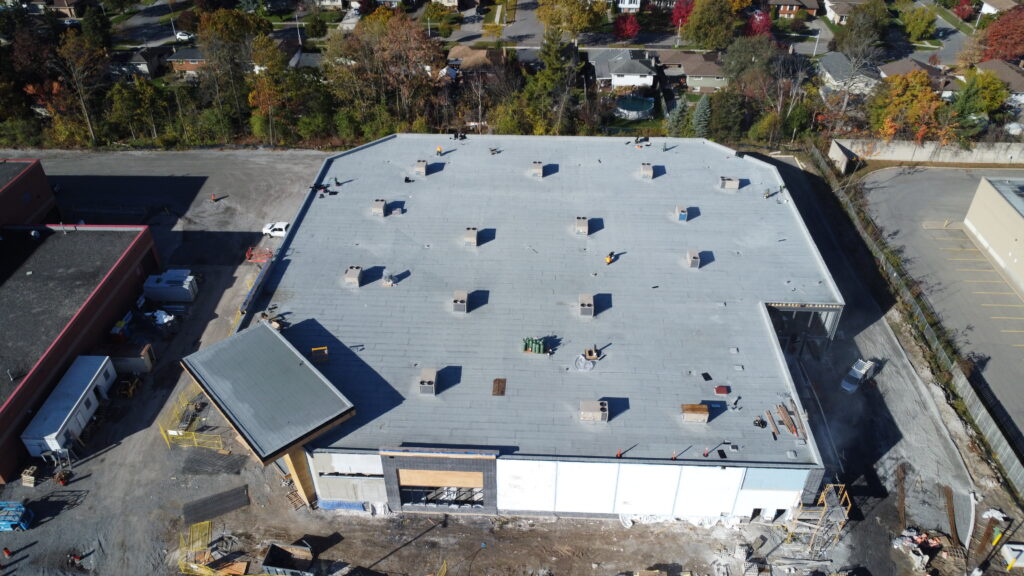
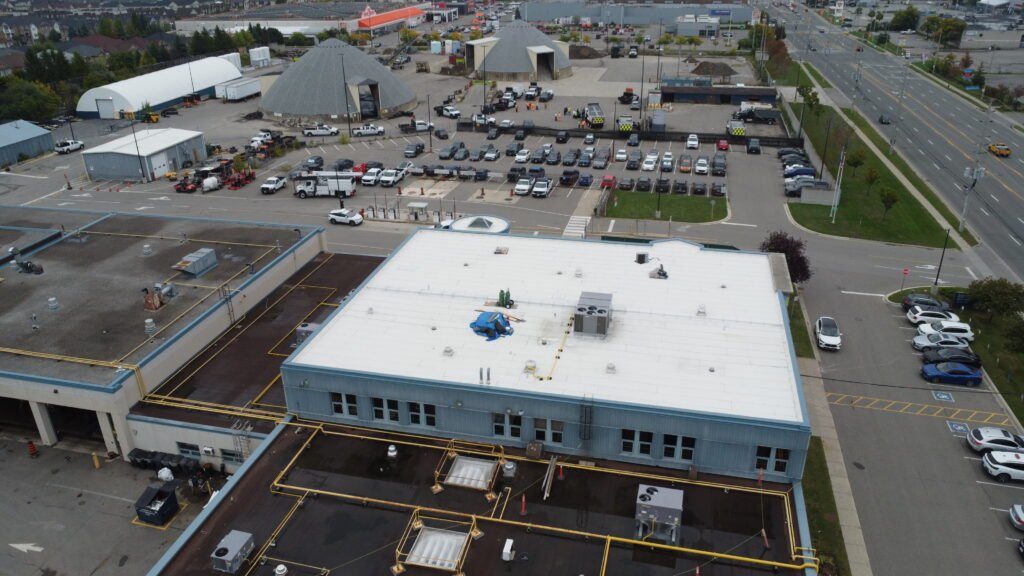

See more on the completed projects page, or read about our roofing services.
Frequently asked questions
What temperature is too cold to put on a roof?
There is no single cut-off. Manufacturers treat anything below 4°C as cold weather and set limits product by product. IKO's TPO guidelines, for example, allow its standard membrane adhesive down to 4°C, a cold-weather adhesive to -4°C, and primers and sealants to -7°C. Below a product's limit, that step waits for a warmer day.
How often should I do a roof inspection?
Twice a year, in spring and fall, plus a check after severe storms. That is the long-standing recommendation of the National Roofing Contractors Association. In Ontario the pre-winter roof inspection matters most, because it is the last good chance to prepare a flat roof for winter before snow and freeze-thaw cycles arrive.
What is the best time of year to clean a roof?
For a flat roof in the GTA, late October to early November, after most leaves have dropped and before the first hard freeze. Clearing drains, scuppers and gutters then keeps meltwater moving through the winter. A second cleaning in spring removes the grit and debris that winter leaves behind.
How to get rid of snow on a flat roof?
Usually you leave it, unless an engineer or roofer says the load is a concern. When snow has to come off, hire a crew that uses fall protection, remove it evenly so no area is overloaded, keep metal tools off the membrane, and fence off the area below where the snow lands.
What are the common problems with flat roofs?
The most common problems are ponding water, blocked drains, open seams, failed flashings, punctures from foot traffic, and blisters or soft spots over wet insulation. Winter makes each one worse because trapped water freezes and expands. A fall inspection is the simplest way to prepare a flat roof for winter and catch them early.
How much snow can a flat roof hold?
It depends on the building. Each roof was designed for the snow load in the Building Code that applied when it was built, and only an engineer can confirm what yours can carry. Ontario's Ministry of Labour notes that a cubic foot of snow weighs from about 7 pounds when new and dry to 30 pounds when old and compacted.
Karol Rajkowski
Vice President · OYH Roofing
Karol Rajkowski is Vice President of OYH Roofing, an Oakville-based ICI flat-roofing contractor whose projects include the City of Mississauga building at 3185 Mavis Rd and the Marriott Hotel in Vaughan. Learn more about the OYH team.
Sources
- Maintaining compliance, Professional Roofing (NRCA), February 2024.
- Still water runs deep, Professional Roofing (NRCA), July 2012.
- IKO Innovi TPO Roofing Systems: Cold Weather Guidelines, IKO Commercial bulletin MM3L006-32, December 2025.
- Cold Weather Application Recommendations for Modified Bitumen Roofing, Asphalt Roofing Manufacturers Association technical bulletin, revised April 2024.
- Canadian Climate Normals 1991 to 2020: Toronto Pearson (Airport), Environment and Climate Change Canada.
- Alert: Snow loading and roof failures, Government of Ontario, updated September 15, 2026.
- R.R.O. 1990, Reg. 851, Industrial Establishments, section 85 (fall protection), under the Occupational Health and Safety Act.
- OYH Roofing project records: 777 Niagara St, Welland; City of Mississauga, 3185 Mavis Rd; Millomat Stampings, Mississauga; residential building, Sault Ste. Marie (October 2026).
OYH Roofing, 2120 Speers Rd, Oakville, ON L6L 2X8 · 1-833-775-7663 · info@oyhroofing.ca