
Ponding Water on a Flat Roof: Causes, Risks and Fixes in Ontario
When standing water is normal, when it becomes a problem, what causes it and how roofers fix it on commercial flat roofs.
Call 1-833-775-7663 Oakville head office · Flat roof repairs, replacements and inspections for commercial, industrial and institutional buildings across Ontario
Karol Rajkowski
Vice President, OYH Roofing
Published October 6, 2026 · 8 min read
Short answer
Ponding water on a flat roof is water still standing 48 hours after rain, the line NRCA uses. Short-lived puddles are normal. Water that stays usually means a blocked drain, a low spot from crushed insulation or a sagging deck, or too little slope, and in Ontario it adds weight, freezes in drains and wears the roof.
What counts as ponding water on a flat roof?
Ponding water is water still standing on a flat roof 48 hours after the rain stops. NRCA's Professional Roofing magazine says ponding water in excess of 48 hours can be detrimental to the roof assembly, and IKO notes that NRCA counts water left for 24 to 48 hours as ponding. In practice, flat roof ponding is judged by time, not by depth.
Flat roofs are not truly flat. They are built with a slight slope so water runs to drains or scuppers, and the common benchmark is 2 per cent, or 1/4 inch per foot. NRCA notes that this is the minimum design slope in U.S. building codes, and the current RCABC standard for TPO roofs it guarantees in British Columbia calls for at least 2 per cent on new and replacement roofs.
| What you see | What it usually means | What to do |
|---|---|---|
| Puddles gone within 48 hours of rain | Normal drainage | Nothing; check it at the next inspection |
| Water still there after 48 hours | Ponding: a drainage or slope problem | Book an inspection and photograph the area from a safe spot |
| Water standing around a drain | A clogged drain, or a drain sitting higher than the roof around it | Have the drain cleared and its height checked |
| Water beside rooftop units or along service routes | Insulation crushed by weight or foot traffic | Replace crushed or wet boards; add walkway pads |
| Water in the middle of a bay between supports | A sagging or settling deck | Have the structure checked before any roofing fix |
| Ice in or around drains in winter | Meltwater refreezing before it drains | Keep drains clear; ask about heat cables, which IKO mentions for cold climates |
What causes ponding on a flat roof?
Ponding happens when water cannot reach a drain, because the drain is blocked or sits too high, the roof has too little slope, or part of the roof has sunk.
- Blocked or badly placed drains. Polyglass names leaves, dirt and other debris as common culprits behind clogged drains, along with drains installed in the wrong location.
- Too little slope. IKO says a roof that slopes away from its drains, or has an inconsistent slope, collects water at its lowest points.
- Crushed insulation. Foot traffic, stored materials and heavy equipment compress the insulation and leave low spots, according to IKO and Polyglass.
- Heavy rooftop units. IKO notes that HVAC equipment can be heavy enough to create a dip in the roof.
- Building movement. Buildings settle and decks deflect over time, which changes the slope, as IKO and NRCA both describe.
- Low spots at roof features. Skylights, vents and curbs can be installed with small dips around them, and water backs up behind wide curbs unless a cricket sends it around.
Some roofs hold water on purpose. Toronto's Wet Weather Flow Management Guidelines list rooftop restrictors among the stormwater measures for commercial and industrial properties, so a slow-draining roof may be working as designed. Check the building's drawings before anyone changes its drains.
Why is ponding water a problem on Ontario roofs?
Ponding water adds weight, sits against every seam and flashing it covers, freezes in winter and shortens the life of the roof.
| Water depth | Added load (metric) | Added load (imperial) | Over a 10 m by 10 m area |
|---|---|---|---|
| 1 cm | About 10 kg per m² | About 2 lb per sq ft | About 1,000 kg |
| 2.5 cm (1 inch) | About 25 kg per m² | About 5.2 lb per sq ft | About 2,500 kg |
| 5 cm (2 inches) | About 50 kg per m² | About 10.4 lb per sq ft | About 5,000 kg |
| 10 cm (4 inches) | About 100 kg per m² | About 20.8 lb per sq ft | About 10,000 kg |
- Leaks at flashings. IKO warns that water can get in when ponding is deeper than the height of the flashing.
- Faster wear. Standing water keeps the membrane wet, collects dirt, and gives algae, moss and plants a place to grow, which IKO lists among the effects.
- Freeze-thaw. Toronto Pearson averages about 81 days a year when the temperature crosses the freezing point, in Environment Canada's 1991 to 2020 normals. Water that freezes in a drain blocks the meltwater behind it.
- Weight in winter. Water that cannot drain adds to the snow already on the roof. Our guide on how to prepare a flat roof for winter covers the drain checks to finish in the fall.
How do you fix ponding water on a flat roof?
Fix the cause, not the puddle. Depending on why water stays, a roofer clears or adds drains, builds crickets, adds slope with tapered insulation, replaces crushed boards or fills a shallow low spot, and anything structural goes to an engineer first.
| Fix | When it fits | What to know |
|---|---|---|
| 1. Clear and repair drains | Water stands around a blocked drain or scupper | Clean strainers at every spring and fall inspection; a drain set too high needs resetting |
| 2. Add drains or scuppers | Large areas sit far from a drain | NRCA notes new drains can conflict with existing building elements below the roof |
| 3. Build crickets | Water collects behind curbs, units or between drains | Crickets, or saddles, steer water around obstacles; the RCABC requires them at curbs and sleepers on replacement roofs it guarantees |
| 4. Add tapered insulation | The roof has too little slope | NRCA: tapered insulation can provide slope for drainage; easiest during a re-roof |
| 5. Replace crushed or wet insulation | Low spots near units or along service routes | IKO links compressed insulation to low spots; walkway pads help keep it from happening again |
| 6. Fill a shallow low spot | A small, isolated dip on a sound roof | IKO mentions puddle fillers; use only a product the membrane's maker approves |
A sagging deck is a structural problem, and IKO advises dealing with structural damage first. If the roof is near the end of its life, slope is cheapest to correct during replacement, when tapered insulation can go in under the new membrane. Our commercial flat roof lifespan guide and warehouse roof replacement guide explain the timing.

Water still on your roof two days after rain?
Tell us where it sits, and we will set up a free roof assessment and a written quote.
Call 1-833-775-7663Request an assessmentDoes ponding water void a roof warranty?
Not automatically, but read your terms. The EPDM Roofing Association says ponded water will not void an EPDM manufacturer's warranty or be the sole reason to deny one, while still urging positive drainage in the design. Other systems and makers set their own rules, and NRCA notes that most warranties require the roof to be properly maintained.
Insurance works differently. The Insurance Bureau of Canada says insurance is meant to cover sudden and accidental loss, so slow damage from water that sat for months is hard to claim. Our commercial roof warranty guide and roof leak insurance guide explain both.
What should a building owner do about ponding water?
Track where and how long water stays, look for signs of leaks inside, and have a roofer find the cause. Building staff should never go on the roof to check; leave that to a roofing crew with fall protection.
- Watch from a safe spot. After heavy rain, note where water sits from an upper window or in photos from your roofer, and check again two days later.
- Photograph and date it. A record of where water stays, and for how long, helps the roofer find the cause.
- Check the ceilings below. Stains under a ponding area mean water may already be getting in; see what to do first in our guides to commercial roof leak repair in Toronto and Mississauga.
- Keep drains on the maintenance list. NRCA recommends inspecting roofs and making repairs twice a year, and both visits should include the drains.
- Fix it before winter. Ponding that freezes is harder to deal with than ponding in October.
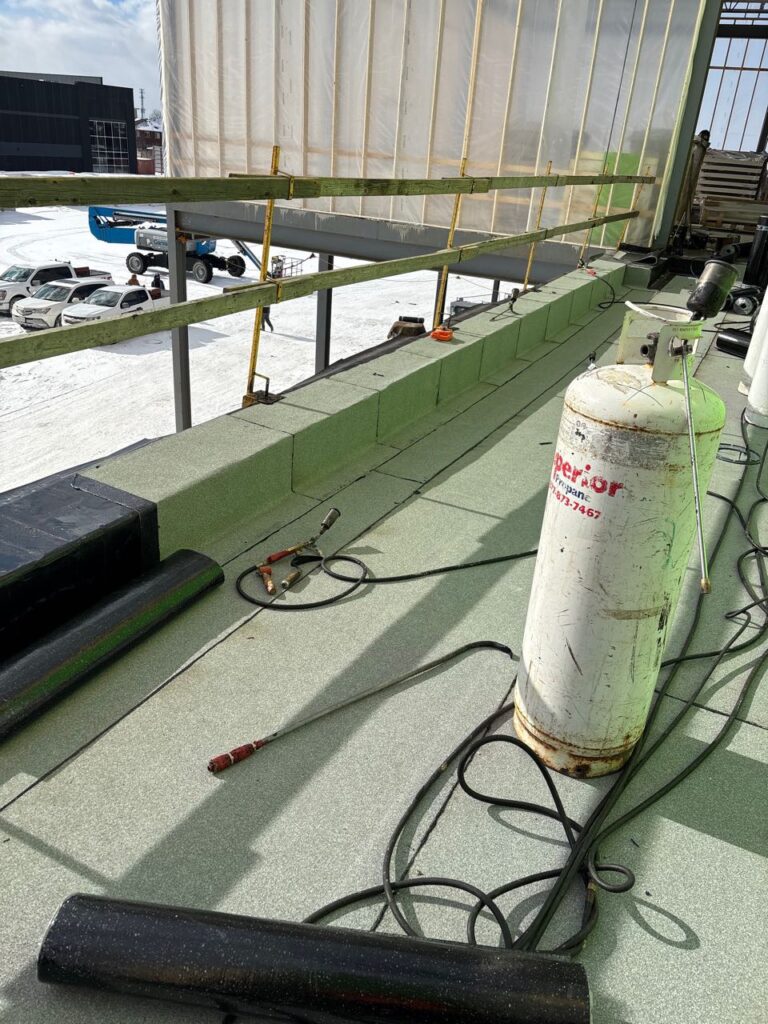
For more on how we work, see our roofing services and the completed projects page, including the City of Mississauga building at 3185 Mavis Rd at the top of this guide and the Marriott Hotel in Vaughan.
Frequently asked questions
How much ponding is acceptable on a flat roof?
Water that drains within 48 hours is generally acceptable; NRCA treats water standing longer than that as ponding that can harm the roof. Shallow puddles that dry within a day or two are normal on most flat roofs. Water that stays longer, keeps returning to the same place or covers flashings needs an inspection.
Is it normal for water to sit on a flat roof?
For a short time, yes. Flat roofs drain slowly, and small puddles after heavy rain usually dry or drain within a day or two. Water that is still there after 48 hours is not normal: it points to a blocked drain, a low spot or too little slope, and a roofer should check it.
What causes ponding on a roof?
Ponding is caused by water that cannot reach a drain. The usual reasons are clogged or badly placed drains, too little slope, insulation crushed by foot traffic or heavy equipment, decks that sag or settle over time, and low spots around skylights, vents and curbs.
How do you fix ponding on a flat roof?
Find the cause first. Roofers clear or add drains, build crickets to steer water around curbs and units, add slope with tapered insulation, replace crushed insulation, or fill a shallow low spot with a product the membrane's maker approves. A sagging deck needs a structural check before any roofing fix.
What is the best drainage system for a flat roof?
Most commercial flat roofs drain best through interior drains with enough slope to reach them, usually 2 per cent, plus crickets between drains and behind curbs and units. Scuppers and gutters at the roof edge suit smaller roofs. The right layout depends on the roof's size, structure and existing drains.
How to fill a low spot on a flat roof?
On a sound roof, a small, shallow low spot can be filled with a product the membrane's manufacturer approves, which IKO calls a puddle filler, or built up with tapered insulation during repairs. If the low spot comes from wet or crushed insulation or a sagging deck, that has to be fixed first.
Karol Rajkowski
Vice President · OYH Roofing
Karol Rajkowski is Vice President of OYH Roofing, an Oakville-based ICI flat-roofing contractor whose projects include the City of Mississauga building at 3185 Mavis Rd and the Marriott Hotel in Vaughan. Learn more about the OYH team.
Sources
- Still water runs deep, Professional Roofing (NRCA), July 2012: the 48-hour test, minimum slope, tapered insulation, crickets and added drains.
- Maintaining compliance, Professional Roofing (NRCA), February 2024.
- Tech Today, Professional Roofing (NRCA), October 2013: warranties and maintenance.
- Why is There Ponding Water on My Flat Roof?, IKO, January 22, 2024.
- Managing Ponding Water on Flat Roof: Causes and Effective Solutions, Polyglass, January 16, 2025.
- TPO Roof Systems Standard, RCABC Roofing Practices Manual, edition adopted January 20, 2026.
- Design questions: would a manufacturer's warranty be terminated due to ponding?, EPDM Roofing Association.
- Wet Weather Flow Management Guidelines, City of Toronto, November 2006.
- Canadian Climate Normals 1991 to 2020: Toronto Pearson (Airport), Environment and Climate Change Canada.
- Water Damage and Flood Protection, Insurance Bureau of Canada.
- OYH Roofing project records: City of Mississauga, 3185 Mavis Rd; Marriott Hotel, Vaughan (October 2026).
OYH Roofing, 2120 Speers Rd, Oakville, ON L6L 2X8 · 1-833-775-7663 · info@oyhroofing.ca